


Buying from a Chinese supplier is not one transaction. It is a chain: quotation, proforma invoice, deposit, production, balance payment, shipping documents, and a commercial invoice that has to match what was ordered.
When the documents arrive by email in Chinese and English, with amounts in CNY or USD and a supplier name that appears three different ways, finance ends up rebuilding the story from attachments. That is where duplicate payments and month-end surprises live.
The document set is the transaction. If the invoice cannot be connected to the PO and the payment, you are guessing.
Start with the purchase order, not the invoice
The PO is the reference point for what was ordered: quantities, unit prices, currency, Incoterms, and the deposit percentage. An invoice only tells you what the supplier believes is due.
The first question on intake should be which PO the invoice consumes. A supplier may ship in several batches, so each invoice has to be matched against the remaining balance, not the original order total.
Expect one supplier to have several names
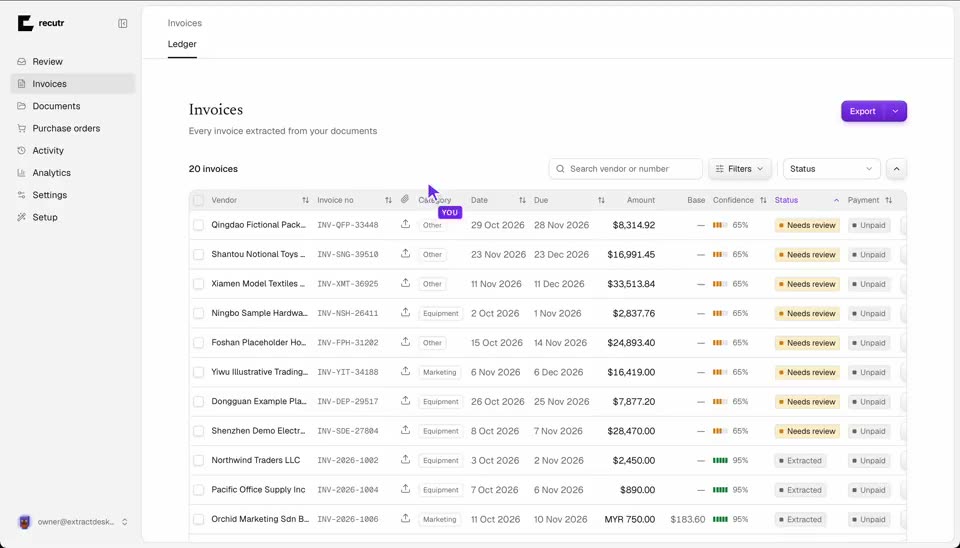
A Chinese supplier may appear as a legal entity in Chinese, an English trading name, and a short brand on the invoice. The bank details or address may differ again. Normalize the supplier for matching, but preserve the printed name on the record.
Invoice numbers deserve the same care. A deposit invoice and a balance invoice can look almost identical. Store the number exactly as printed, and treat date, amount, and currency as part of the record's identity.
Model deposits and balances as separate records
A 30/70 deposit is normal in import trade. The deposit invoice is not a duplicate of the final invoice; it is a partial billing against the same PO.
If a system only compares the invoice total to the PO total, the PO looks over-billed after the deposit. If it ignores the deposit, the buyer can pay twice. The PO needs ordered, billed, and remaining amounts, and each invoice should move the billed number.
Normalize the currency without rewriting the source
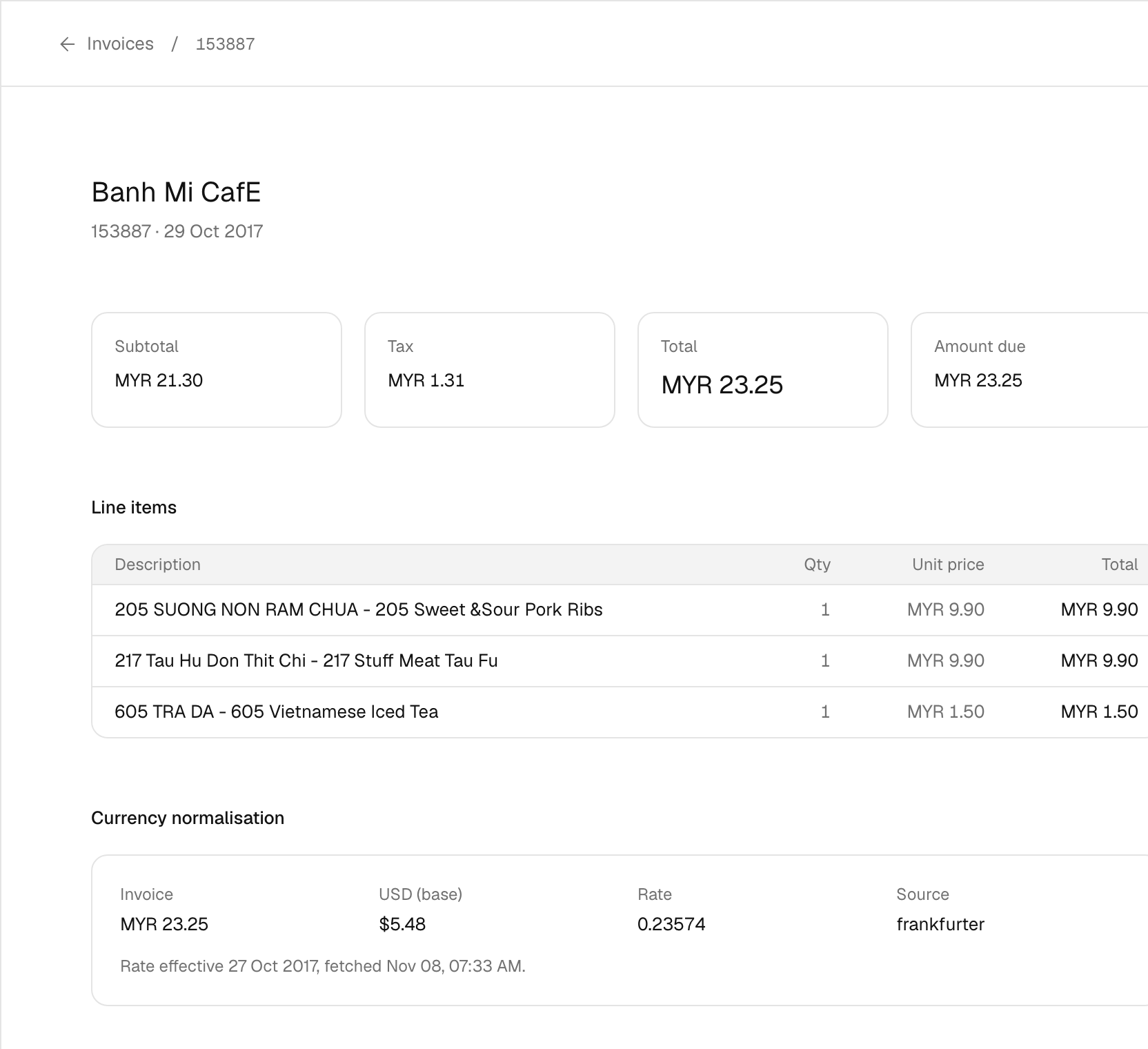
Your ledger may run in MYR, SGD, USD, or EUR while the supplier invoices in CNY or USD. Conversion is necessary for reporting, but the printed amount must stay exactly as it appeared.
Keep the original amount, currency, base-currency total, the rate used, and the rate source. That way the bookkeeping view is consistent and the audit view still matches the document.
Make the review step visible
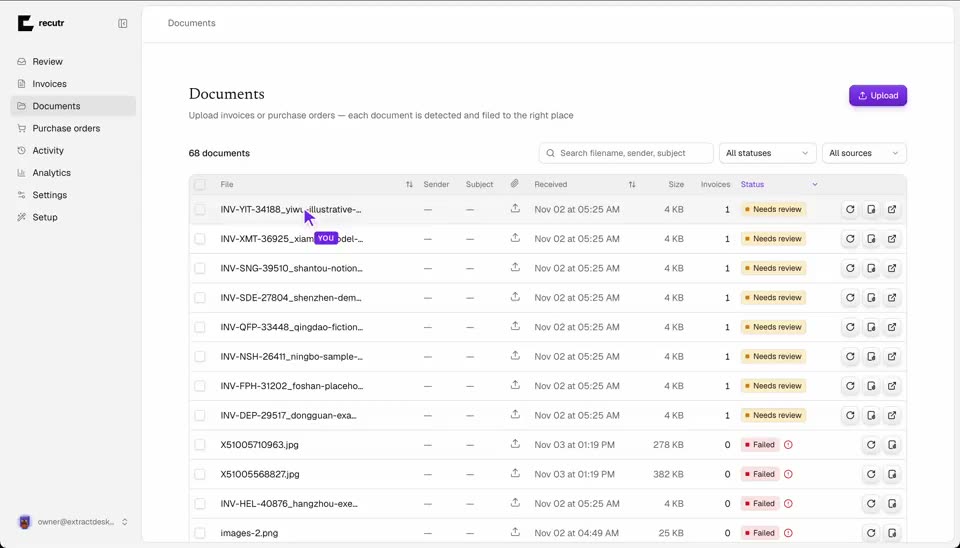
Low-confidence fields, mismatched totals, duplicate suspects, and PO exceptions should route to a person. The reviewer needs the source document beside the record, the reason for the flag, and a clear approve or reject action.
Approval is a separate decision from extraction. The person approving a payment should see the PO balance, not just a green checkmark.
Keep the trail through accounting
When the invoice posts to QuickBooks or Xero, attach the source PDF and carry the supplier, PO number, original currency, and base amount. If a posting run fails, retry it. If it posts twice, void it. The accounting handoff should be as traceable as the extraction.
A practical checklist
- Match each invoice to a PO before approval.
- Keep the printed amount and currency; store the converted total separately.
- Treat deposits and balances as separate invoices against the same PO.
- Normalize supplier names without overwriting the printed name.
- Check totals, tax, and duplicates before review.
- Attach the source PDF to the accounting bill.
- Record who approved what, when, and why.
Importing from China is not risky because the documents are foreign. It is risky because the documents are disconnected. Connect the PO, invoice, payment, and posting, and the audit trail becomes a by-product of the daily work.